
About the Book
About the Book
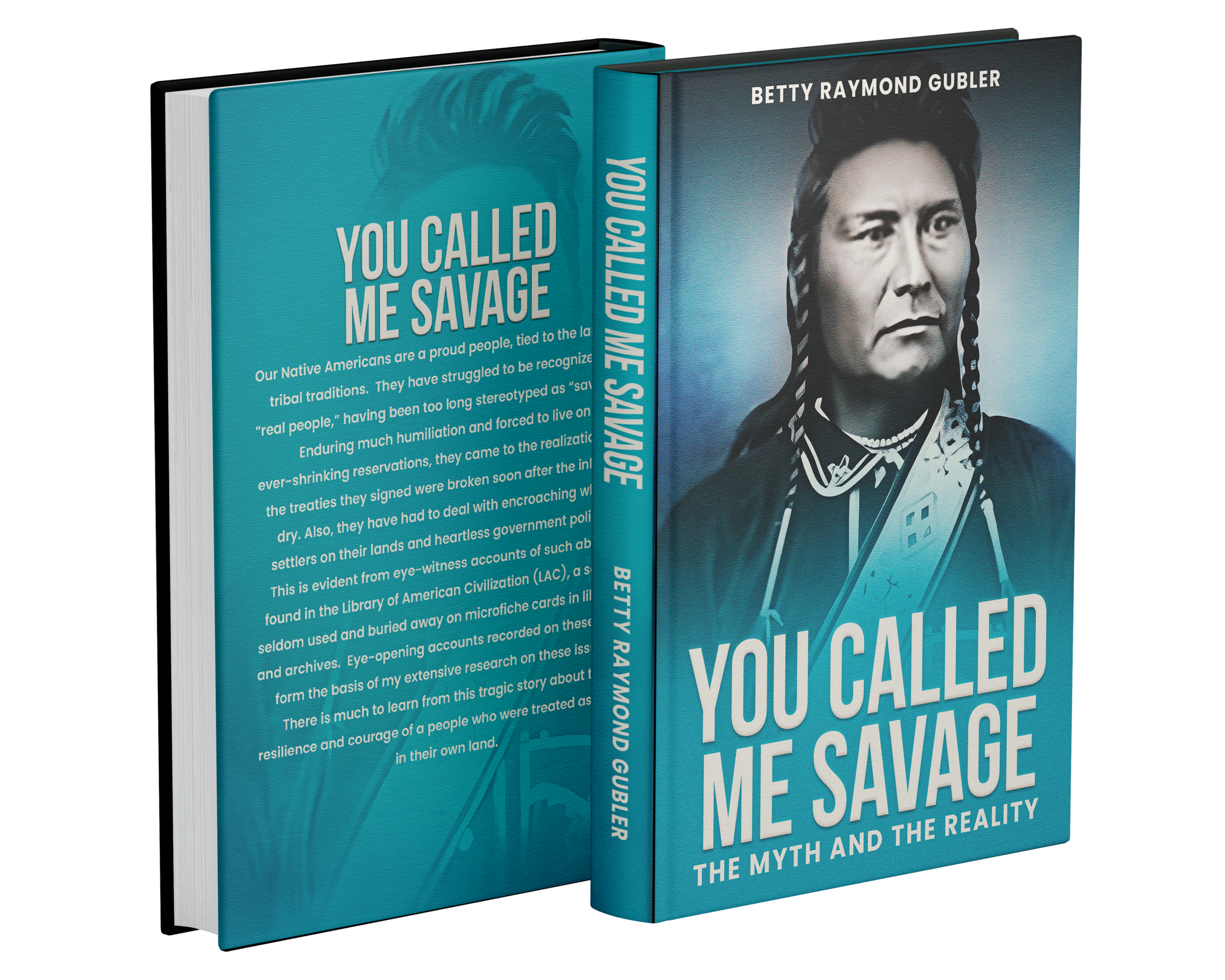
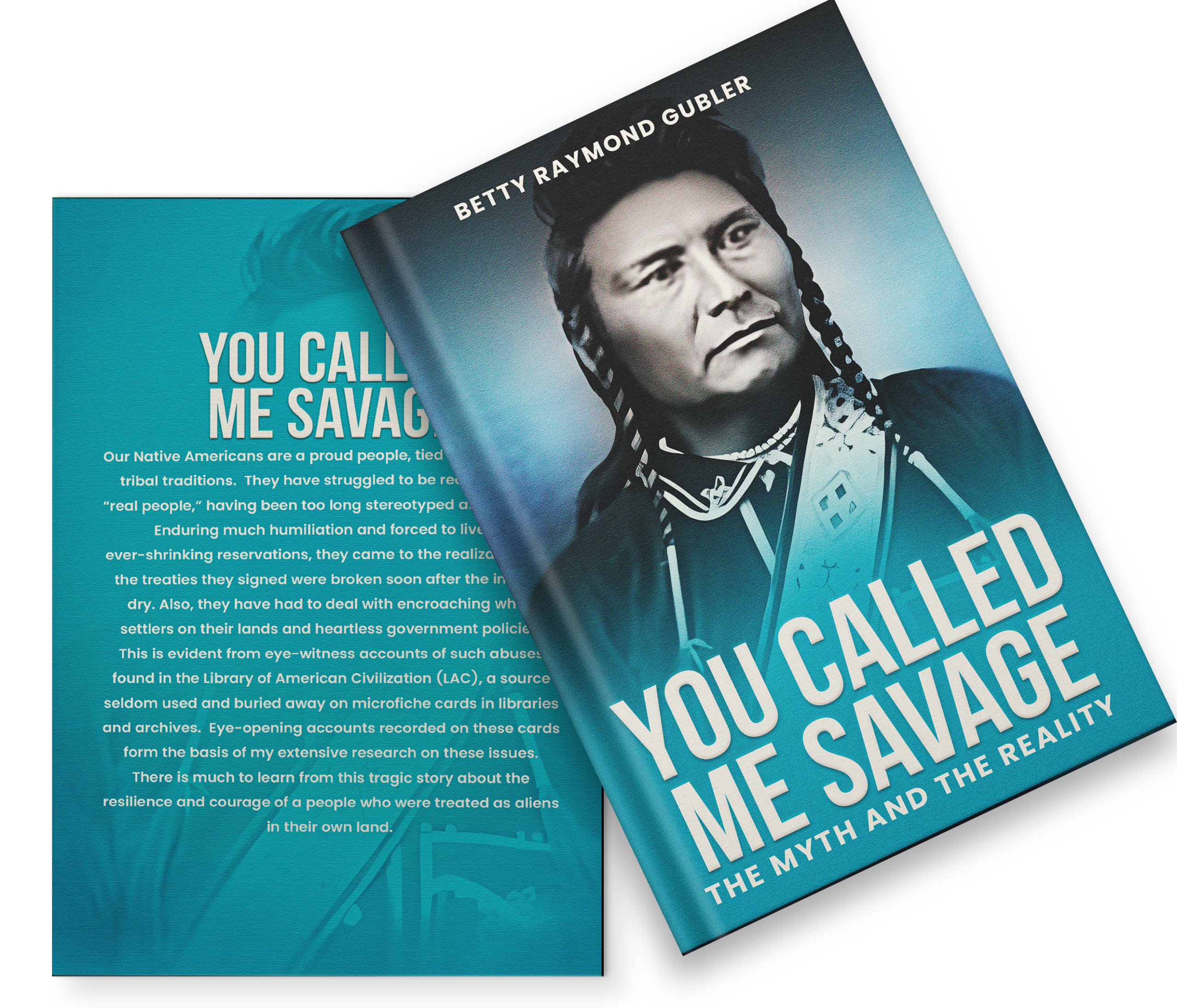
You Called
Me SAVAGE
THE MYTH AND THE REALITY
For centuries, one word has done a great deal of work in American history. “Savage.”
It was a label, and it was also a justification. You Called Me Savage asks who used that word, why, and whether the early records actually support it.
Gathering eyewitness accounts from explorers, missionaries, soldiers, captives, frontier writers and Native speakers, Betty Raymond Gubler takes readers through the history of contact between Native Americans and whites. She traces how first impressions of generosity and hospitality hardened into stereotypes as land became the prize, and how treaties, removals and reservation confinement followed. Many of these accounts come from the Library of American Civilization collection, a source she describes as seldom used and buried on microfiche cards in libraries and archives.
The book is not an attempt to turn one people into saints and another into villains. Gubler acknowledges rivalries and wrongdoing within Native societies, and she does not hold today’s readers responsible for the actions of past generations. Her concern is truth, and what honest history asks of us now.
What you’ll find inside
The book moves from the first meetings between Europeans and Native peoples through the major chapters of conflict and displacement. It then turns to how Native people were described by those who knew them well, and to what Native wisdom still has to offer. Its thirteen chapters and epilogue cover:
- The origins and misuse of the word “savage”
- Exploration and the pursuit of gold
- Planters, Pilgrims and Puritans, and the wars of extinction in New England
- The surprising phenomenon of whites who chose to live among Native peoples, and captivity
- Land ownership, treaties and removals
- Reservation confinement and the trails west
- Soldier diplomacy in the Wild West
- The tragedies of the Blackfeet and Nez Perce, and the “taming” of the Comanches and Apaches
- Native personality as observed in the past, and the demoralization that followed contact
- Native wisdom and personality, and the epilogue on the seventh generation
It closes with an extensive bibliography and endnotes for readers who want to follow the sources.
Why this book
- It lets the sources speak. The book is built from firsthand voices, including many from people who had nothing to gain by speaking well of Native peoples.
- It is balanced in intent. It aims at corrected history, not blame.
- It ends in hope. The epilogue turns toward the Native ethic of living for the seventh generation, and toward the dignity and endurance of a people who are still here.
Who it’s for
Readers of American and Native American history who suspect their schoolbooks left things out. Teachers and students, book clubs, library and archive enthusiasts, and anyone interested in honest national memory, reconciliation and Native wisdom.
Book details
Paperback, 6 × 9 in., 695 pages. Copyright 2026.